If you have been scrolling through home inspiration and found yourself equally drawn to sleek modern interiors and calm minimalist spaces, you are not alone. The two styles look similar at first glance, but work very differently in practice, especially in a compact home. Choosing the right one for your space and personality makes the difference between a home that feels designed and one that just feels empty or overdone.
Here is an honest comparison to help you figure out which small house interior design idea actually fits the way you live.
Key Takeaways
- Understand the Difference: While both are highly effective small house interior design ideas, modern design relies on mixed materials, bold shapes, and contrast, whereas minimalism strips a room down to its bare, functional essentials.
- Storage and Display: Modern interiors embrace visible storage—making it the better choice if you love showcasing a growing collection of physical books, travel finds, or layered decor. Minimalism demands concealed storage to keep sightlines perfectly clean.
- Space vs. Character: A minimalist approach naturally makes compact rooms feel larger by eliminating visual clutter. Modern design adds warmth and personality but requires careful editing to avoid overwhelming a small footprint.
- Budget and Maintenance: True minimalism is harder to maintain daily and often costs more upfront due to custom-built-in storage needs. Modern spaces are more forgiving of everyday life and offer greater budget flexibility by easily mixing high- and low-end pieces.
Modern and minimalist interiors get grouped together so often that the distinction starts to feel like a matter of taste rather than substance. It is not. The two styles work on different principles, make different demands on the people living in them, and perform differently in compact spaces. One reward layering and personality. The other rewards restraint and consistency. Both can make a small home feel larger and more intentional, but only if they match how you actually live, not just how you want your home to look on a good day. Here is what sets them apart, and how to figure out which one is genuinely right for you.
What Modern Style Actually Means
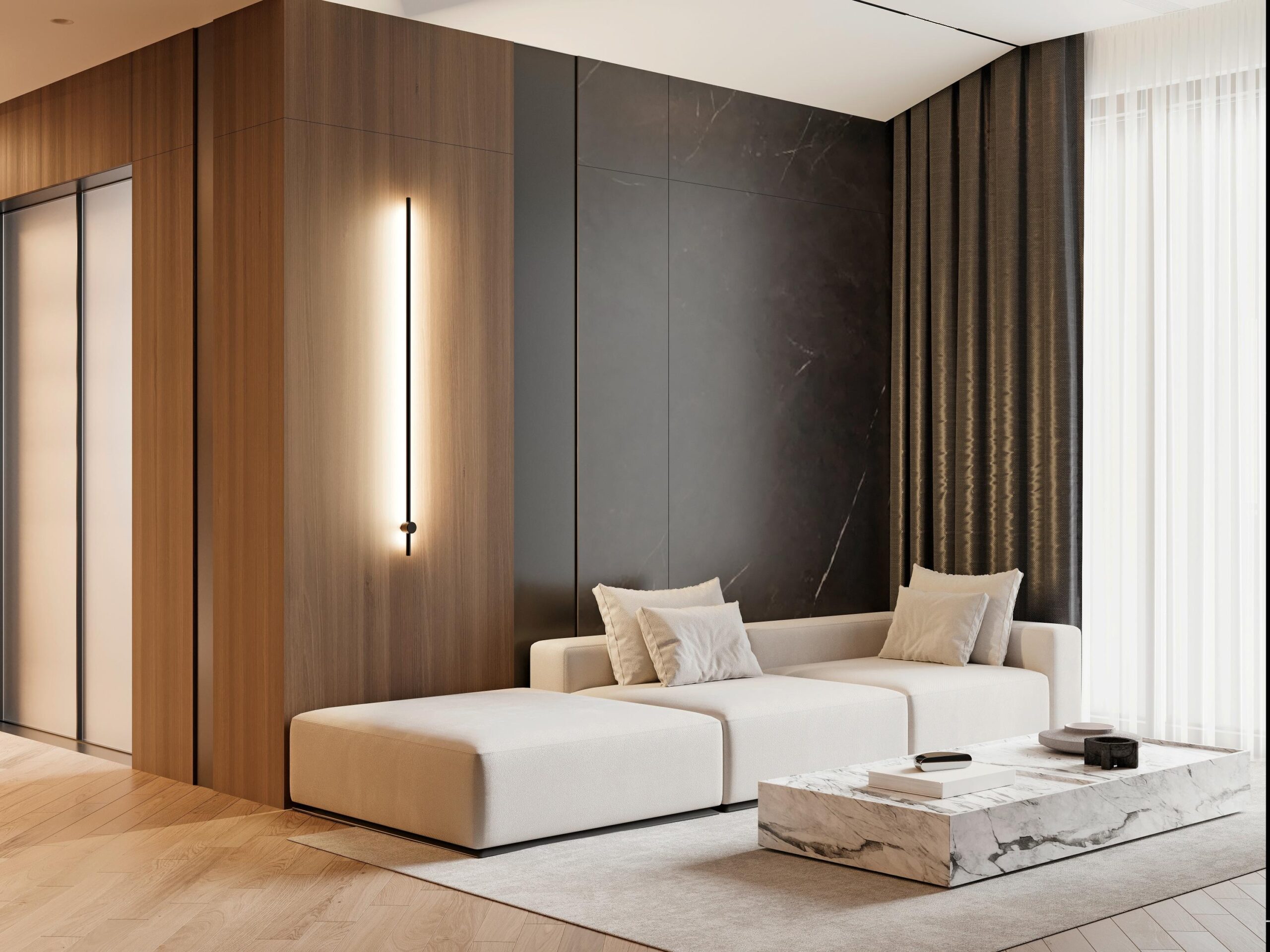
Modern interior design is often misunderstood. It does not simply mean new or contemporary. As a design style, modern refers to a mid-century movement that favors clean lines, a mix of materials, and a balance between form and function. In a modern small house interior, you will typically see bold geometric shapes, a mix of wood and metal, statement lighting, and a palette that includes deeper tones alongside neutrals.
Modern design allows for more visual interest. There is texture, contrast, and a sense that each piece was chosen deliberately for how it looks and feels together. For people who want their home to feel alive and expressive without being busy, the modern style offers that range.
The trade-off in a compact space is that modern interiors require careful editing. The material mix and contrast that make this style exciting can quickly tip into visual noise if too many elements compete for attention in a small room.
What Minimalist Style Actually Means
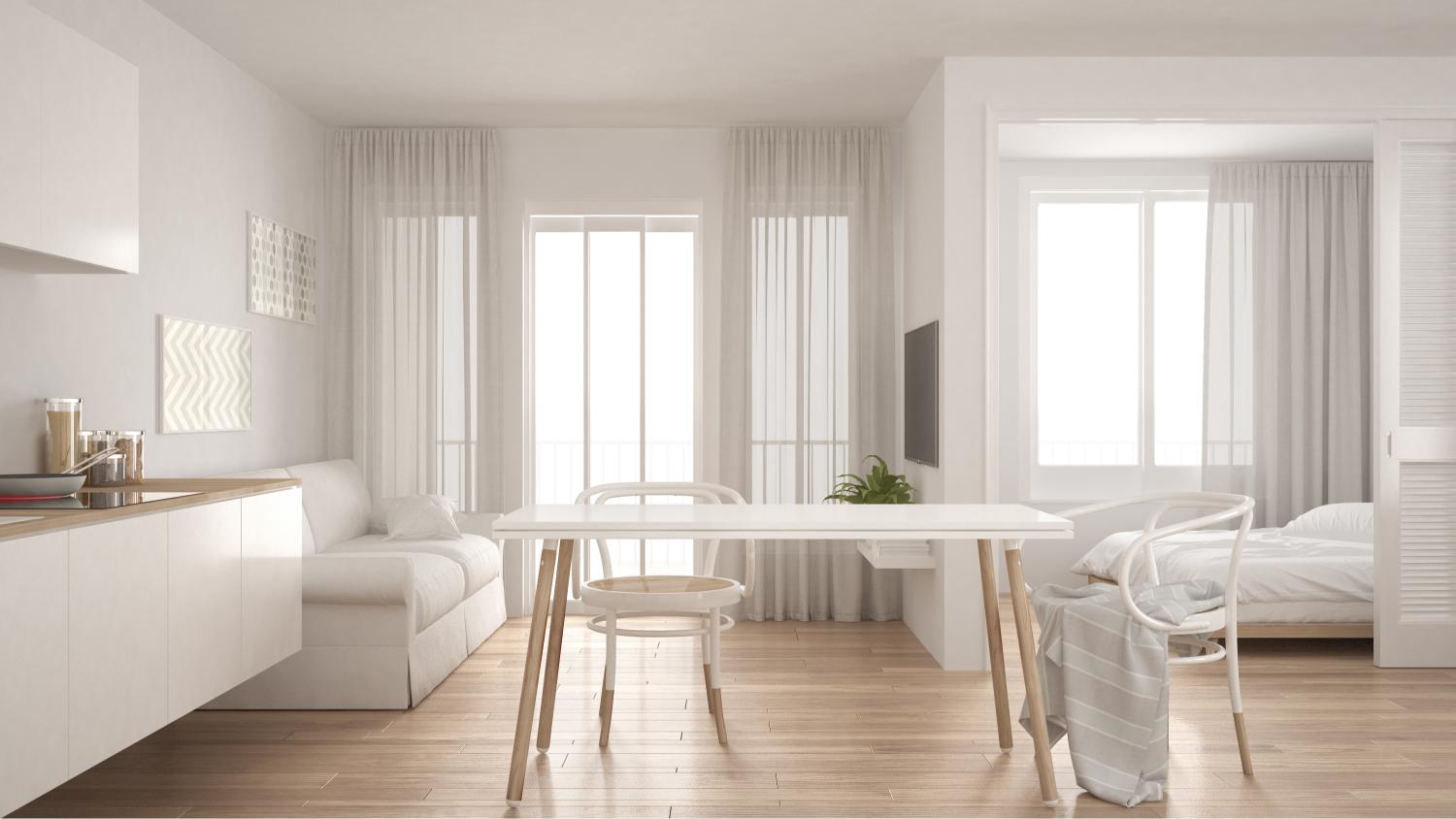
Minimalist small home design goes further than most people expect. It is not just about owning less or keeping surfaces clear. True minimalism is a commitment to stripping a space down to what is necessary and finding beauty in that restraint. The palette stays tight, usually white, warm grey, or soft beige. Furniture is simple in form. Decoration is nearly absent.
In a small home, minimalism has a clear functional advantage. Fewer objects mean more breathing room. A minimalist interior naturally makes a compact space feel larger because there is very little for the eye to land on and nowhere for clutter to hide. Every element gets space to exist on its own.
The challenge is that minimalism requires discipline to maintain. One busy week, one pile of mail on the counter, and the aesthetic starts to fall apart. It also tends to feel cold or impersonal if the foundational materials, like flooring, textiles, and wall finishes, are not chosen with enough warmth and care.
How They Compare in a Compact Home
When it comes to small home interior styles, both approaches have genuine strengths. Here is where they differ in ways that matter for smaller spaces.
Storage handling is one key difference. Modern interiors often incorporate visible storage, such as open shelving, display cabinets, and multifunctional furniture with character. Minimalist interiors prefer concealed storage to maintain clean sightlines. Both work, but minimalism demands more upfront built-in planning.
Flexibility is another factor. Modern small-house interiors can accommodate a new chair, a plant, or an art print without losing coherence. A minimalist space is more sensitive to additions. What you bring in matters more because there is so little else competing with it.
Cost is worth considering, too. Achieving a convincing minimalist interior is often more expensive than it looks. Quality materials and custom storage solutions carry a price. Modern design allows for greater budget variety because the style naturally accommodates mixing high and low pieces.
So Which One Is Right for You?
Think about how you actually live, not how you wish you lived. If you enjoy collecting objects, displaying books, and layering textures over time, a modern small house interior will age well with you. It has the flexibility to grow and shift without losing its identity.
If you feel genuinely calmer in uncluttered spaces, find it easy to resist accumulating things, and are willing to invest in quality storage from the start, a minimalist small home will reward you every single day.
Both are strong small house interior design ideas for compact living. The one that suits you is the one you can actually sustain, not just the one that looks good in a mood board.
FAQs
Q1. Are modern and minimalist interior styles the same thing?
They are not, though they are frequently confused. Modern design draws from a mid-century movement that favors clean lines, mixed materials, geometric shapes, and a balance between form and function. It allows for contrast, texture, and visual personality. Minimalism goes further; it strips a space down to only what is necessary and treats restraint itself as the aesthetic. Both look clean, but modern design has more character and warmth built into its structure.
Q2. Which style makes a small home feel bigger?
Minimalism has the natural advantage here. Fewer objects mean more breathing room, and with very little for the eye to land on, a compact space automatically feels more open. Modern interiors can also make a small home feel larger, but they require more careful editing – the material mix and contrast that give modern design its energy can tip into visual noise if too many elements compete in a tight space.
Q3. Which style is easier to maintain day-to-day?
Modern interiors are more forgiving. A new chair, a plant, or an art print can be added without disrupting the overall feel. Minimalism is more sensitive – one pile of mail on the counter or a busy week without tidying and the aesthetic starts to fall apart. If your daily life involves a degree of natural clutter, a modern interior will hold up better over time.
Q4. Which style costs more to achieve?
Minimalism typically costs more upfront than it appears to. Clean sightlines depend on concealed storage, which often means custom-built-ins, quality materials, and considered planning before a single piece of furniture arrives. Modern design allows for greater budget flexibility because the style naturally accommodates mixing high and low pieces without losing coherence.
Q5. How do I decide which style is right for me?
Think about how you actually live, not how you wish you lived. If you enjoy collecting objects, displaying books, and layering the room over time, a modern interior will grow with you. If you feel genuinely calmer in uncluttered spaces, find it easy to resist the urge to accumulate things, and are prepared to invest in quality storage from the start, minimalism will reward you daily. The right choice is the one you can sustain, not just the one that looks good on a mood board.