Key Takeaways
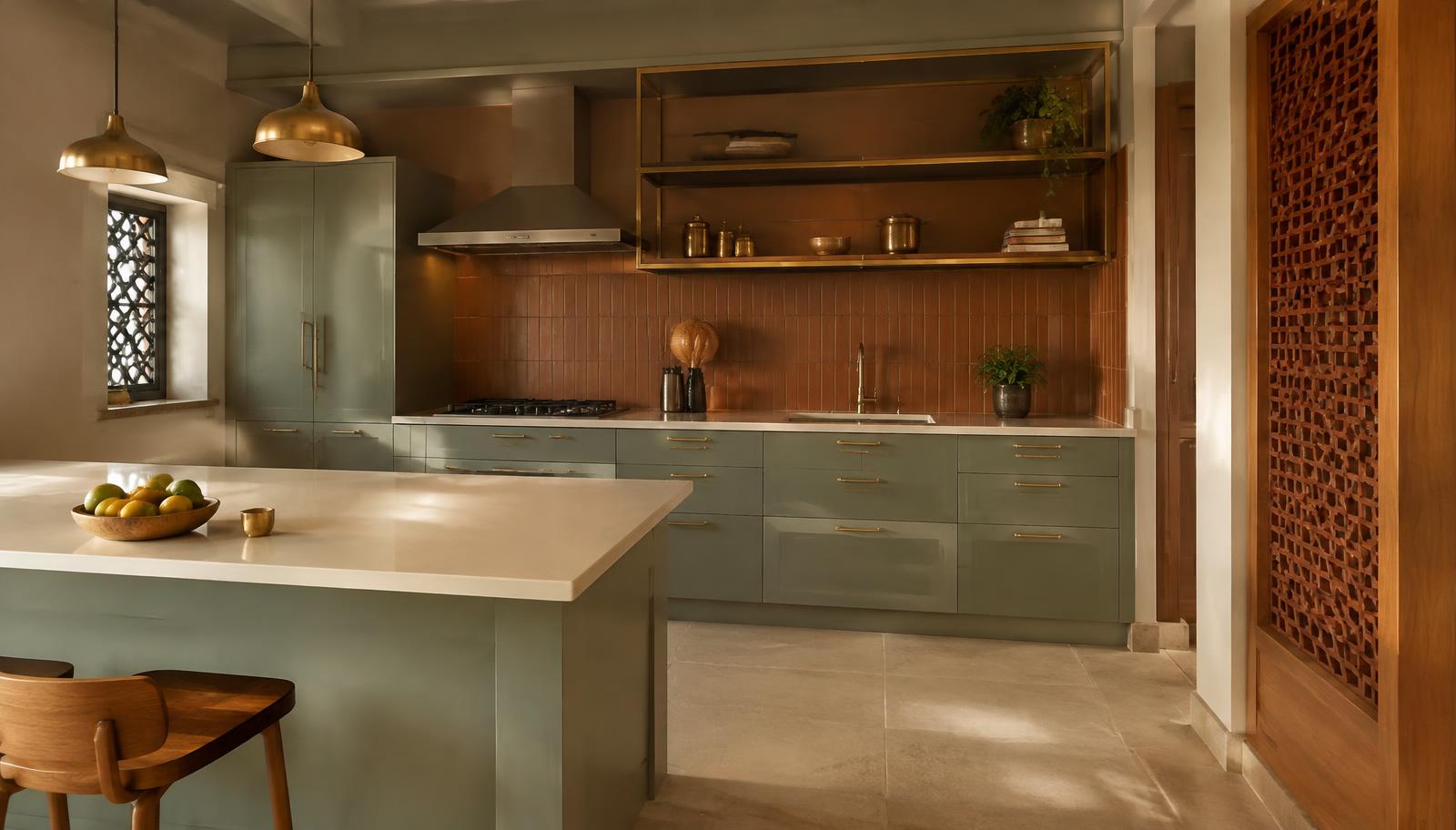
- The Core Concept: Indo-contemporary design fuses traditional Indian artistry like intricately detailed jalis, warm brass accents, and handcrafted tiles with clean, minimal, highly functional modern cabinetry.
- Color Palette Mastery: Pair deep earthy tones (terracotta, warm ochre, forest green, rich teak) with neutral background surfaces to balance visual warmth and modern room spaciousness.
- Focal Points & Details: Subtle integrations, such as jali patterns for kitchen cabinets, hammered brass hardware, and hand-painted tile backsplashes, impart immense personal character without cluttering your workspace.
- Practical Layout & Materials: Choose semi-open layouts with glass partitions to capture light while containing heavy cooking aromas. Pick sturdy, low-porosity flooring like matte porcelain or terrazzo for easy upkeep.
- Modern Efficiency: Seamlessly integrate heavy-duty chimneys, smart modular pull-outs, and quartz countertops to keep the space intensely practical for daily Indian culinary routines.
Yet, as sleek European minimalist designs flooded the market, many homeowners began to feel a missing link. High-gloss white cabinets and stark handleless drawers can sometimes feel cold, clinical, and detached from the warmth of Indian domestic life. This design tension gave birth to one of the most exciting trends in residential architecture: Indo-Contemporary Kitchen Interior Design.
By bringing together India's rich heritage, warmth, and artistic craftsmanship with the clean lines, ergonomic efficiency, and streamlined beauty of contemporary architecture, this style offers the best of both worlds. Here is your comprehensive guide to creating a vibrant, functional, and soulful Indo-fusion cooking space in your home.
Understanding the Foundations of Indo-Contemporary Kitchen Interior Design
At its core, Indo-contemporary style isn't about throwing together random vintage pieces in a modern apartment. It is a thoughtful balance where heritage accents enhance modern functionality. You are creating a space that feels deeply rooted in cultural context while operating with effortless modern efficiency.A classic modern Indian kitchen style relies heavily on harmony. Where modern design emphasizes straight lines, minimalist surfaces, concealed storage, and integrated appliances, traditional Indian decor brings texture, intricate patterns, tactile materials, and storytelling warmth. When these two philosophies meet, the result is a space that feels cozy yet spacious, artistic yet practical.
To master this look, you must avoid over-decorating. Traditional aesthetics can easily overpower a room if applied without restraint. The secret lies in selecting two or three authentic ethnic features such as custom cabinet inserts, vintage-inspired light fixtures, or handcrafted splashbacks and framing them against a minimalist, highly functional modern shell.
Crafting the Perfect Palette: Earthy Tones and Warm Accents
Color sets the emotional tone for any home interior, and an Indo-fusion kitchen interior design relies heavily on a groundedly luxurious palette. Minimalist modern designs often lean heavily on sterile whites, standard cool greys, or stark blacks. Indo-contemporary style, by contrast, invites a rich spectrum inspired by natural landscapes, traditional spices, and Indian architecture.
1. Earthy Base Colors
Start with warm, grounding tones. Deep terracotta, muted turmeric yellow, burnt sienna, moss green, and warm clay bring immediate character to the space. If you prefer muted walls and cabinetry, consider rich wood finishes like natural teak, rosewood, or sheesham. These woods provide an organic texture that instantly softens stainless steel appliances and smooth engineered stone countertops.2. Balancing Neutrals
To maintain a sleek contemporary feel, balance your warm earthy tones with soft neutrals. Sandstone beige, warm off-white, cream, or light taupe work beautifully on walls and main prep counters. This prevents the room from feeling visually heavy or claustrophobic, especially in compact apartment layouts.3. High-Contrast Accents
For a bold, modern edge, incorporate deep charcoal, deep royal indigo, or olive green on lower cabinets, paired with lighter upper cabinets. This color-blocking technique grounds the room while maintaining an open, airy feeling at eye level.Incorporating Traditional Craftsmanship: Artisanal Elements
A defining feature of traditional-meets-modern kitchen decor is authentic craftsmanship. Bringing artisanal details into modern furniture design bridges generations of design history.
Jali Patterns for Kitchen Cabinets
One of the most striking ways to introduce cultural texture is by using jali patterns for kitchen cabinets. Traditionally used in Indian architecture for ventilation and light diffusion, carved geometric or floral lattice work brings breathtaking visual depth to modern storage units.Instead of full wooden lattice panels on every door, which can be tricky to clean in a high-grease environment, consider using metal jali inserts, laser-cut wooden panels over frosted glass, or jali cut-outs on upper wall units and pantry doors. This allows light to filter through, creates soft visual transparency, and keeps your stored items protected while adding unmistakable heritage charm.
Handcrafted Tile Backsplashes
The backsplash offers a prime canvas for artistic expression. Swap out generic subway tiles for hand-painted ceramic tiles, Athangudi-inspired patterns, Moradabad tile motifs, or intricate Encaustic tiles. A colorful, patterned backsplash serves as an eye-catching focal point behind a sleek induction cooktop or stainless steel chimney range hood, creating a deliberate contrast between artisan craftsmanship and modern technology.Design Tip: If you select a busy, patterned tile backsplash, keep your countertops solid and pattern-free, such as polished white quartz or dark granites to ensure the visual focus remains clear and uncluttered.
Selecting Hardware and Metal Finishes: Brass Hardware and Earthy Tones for Kitchens
Metals play a critical role in bringing authentic Indian heritage to life. Historically, Indian kitchens revolved around brass, copper, and bronze cookware. Bringing these metals into your fixtures creates an inviting link to traditional kitchen culture.Pairing brass hardware with earthy tones creates instant warmth against smooth cabinet faces. Swap out standard chrome or brushed nickel handles for handcrafted antique brass pull bars, knurled copper knobs, or vintage-style brass drop handles. The subtle golden patina of brass creates an irresistible warmth against dark green, terracotta, or deep wood cabinets.
Beyond cabinet pulls, consider carrying brass through other elements in the room:
- Faucets & Fittings: A sleek goose-neck brass or antique bronze faucet adds a touch of understated luxury to modern undermount sinks.
- Pendant Lighting: Install hand-hammered brass or copper pendant lights over a breakfast counter or central kitchen island. The hand-worked texture catches light beautifully and casts a warm glow across the seating area.
- Open Shelving Brackets: Mount open wooden shelves using custom brass brackets to display vintage brassware, mortar and pestles, or ceramic spice jars.
Layout and Spatial Dynamics: Open vs. Closed Configurations
Indian cooking involves heavy tadkas, deep frying, high heat, and intense aromatics. Because of this, layout decisions require careful functional planning that balances aesthetic openness with everyday cleanliness.
The Semi-Open Compromise
While open-concept living is a staple of contemporary home architecture, a completely open kitchen can sometimes present practical challenges with smoke and oil dispersion. The ideal Indo-contemporary solution is often a semi-open layout.Use fluted glass sliding doors, black steel or brass-framed glass partitions, or decorative wooden jali screens to separate the kitchen visually while allowing light to flow freely. This creates connected, airy spaces while keeping cooking fumes and noise contained during high-heat prep work.
Zoning and Work Triangles
Ensure your floor plan respects the ergonomic work triangle the distance between your sink, refrigerator, and cooktop. Modern modular hardware like pull-out tall pantries, corner carousel units, and soft-close tandem drawers helps keep even the busiest cooking sessions organized and stress-free.Flooring Choices for an Indo-Fusion Kitchen
Kitchen flooring must be durable, slip-resistant, easy to clean, and able to handle occasional spills or dropped heavy utensils. At the same time, it anchors the visual weight of your design scheme.1. Terrazzo Flooring
Terrazzo has made a massive global comeback, and it fits naturally into Indo-contemporary interior design. Made with chips of marble, quartz, and granite, terrazzo offers a subtly speckled texture that hides minor scuffs while adding playful mid-century charm that pairs perfectly with wooden cabinetry.2. Natural Stone and Matte Porcelain Tiles
Kota stone, Kadappa limestone, or matte porcelain tiles mimicking natural slate bring an authentic, earthy tactile experience underfoot. Their muted finish balances high-gloss cabinet surfaces and keeps the floor cool during warm summer months.3. Patterned Cement Tiles
For smaller kitchens or designated prep areas, patterned cement tiles such as traditional Bharat floor tiles can be laid down to create a rug effect directly in front of the main counter or kitchen island. Framing a patterned tile patch with plain border tiles adds architectural structure without visually overwhelming the floor space.Integrating Smart Modern Amenities with Heritage Aesthetic
An Indo-contemporary kitchen must never sacrifice performance for beauty. The magic of this design movement lies in how effortlessly high-performance modern tech disappears into an artistic frame.- Concealed Appliances: Build integrated refrigerators, dishwashers, and microwaves behind custom cabinet fronts matching your primary wood or painted finishes. This keeps continuous sightlines clean and uncluttered.
- High-Suction Chimneys: Invest in a powerful baffle-filter chimney with built-in auto-clean technology. To blend it into an Indo-contemporary scheme, enclose the chimney hood inside a custom wooden cowl or a plastered box finished in a micro-cement or lime-wash texture.
- Quartz or Granite Countertops: While marble looks gorgeous, it is highly porous and prone to staining from turmeric and citrus juices. Opt for non-porous engineered quartz or dark sealed granite (like Telephone Black or Flamed Absolute Black) for maximum stain resistance and ease of cleaning.
Styling and Decor: Finishing Touches with Soul
Once your major fixtures, cabinets, and appliances are in place, the final layer of styling brings your space to life. The goal is to curate meaningful, functional objects rather than filling shelves with non-functional knick-knacks.- Traditional Storage Vessels: Display ceramic pickle jars (barnis), hammered copper water dispensers, and vintage spice boxes (masala dabbas) on open wooden shelves. They serve as functional kitchen tools while offering instant heritage charm.
- Greenery & Botanicals: Bring fresh indoor plants into the kitchen. Small terracotta pots filled with fresh curry leaves, basil, or mint on the windowsill add natural color, scent, and everyday cooking convenience.
- Art and Textiles: Frame vintage botanical prints of Indian spices or small Madhubani or Pichwai paintings on non-greasy wall space near the dining nook. Use handwoven linen or khadi kitchen towels to introduce soft tactile details.